Save big on solar gear today!
Solar Subsidies 2024: Government Subsidies for Solar Panels
When considering solar panel installation in your space, the first thing you might wonder is, "How much does it cost to install solar panels in a home?" Right? The best thing about installing solar panels is that you will benefit from government subsidies. Having a solar setup at your property is more affordable than you might think, especially in the long run.
The Government of India designed solar subsidies to encourage more homeowners to choose a sustainable option and embrace renewable energy. By offering significant savings on solar installation costs, the government is making it easier and more affordable for people to choose solar power for their electricity needs.
Solar Subsidies 2024: Government Subsidies for Solar Panels
The amount of solar panel Government subsidies depends on your solar energy system:
- For systems up to 2kW, you can receive up to ₹30,000 per kilowatt in subsidies.
- If you're installing a 3kW system, you're eligible for a ₹78,000 subsidy.
- And for systems larger than 3kW, you'll still get that ₹78,000 fixed subsidy.
The subsidy is based on the lower of the module or inverter capacity, and some states offer additional incentives in addition to the national program.
Solar Subsidies 2024: Government Subsidies for Solar Panels
The Government of India has launched the National Portal for Rooftop Solar to make the application process as simple as possible. Through this online platform for government solar subsidies, you can apply for the subsidy, track your application status, and even receive the funds directly into your bank account - all from the comfort of your own home.
To qualify, your solar project must be registered on the portal and use domestically-produced solar panels and equipment. The installation also needs to follow all MNRE guidelines and be done by an approved vendor. Once your application is submitted, the feasibility is assessed within 15 days.
After approval, you'll work with your registered vendor to get the system installed. Once the net metering is set up and the inspection is passed, you'll receive your commissioning certificate, and the subsidy money will be deposited into your account within 30 days.
Where To Apply for Solar Rooftop Subsidy?
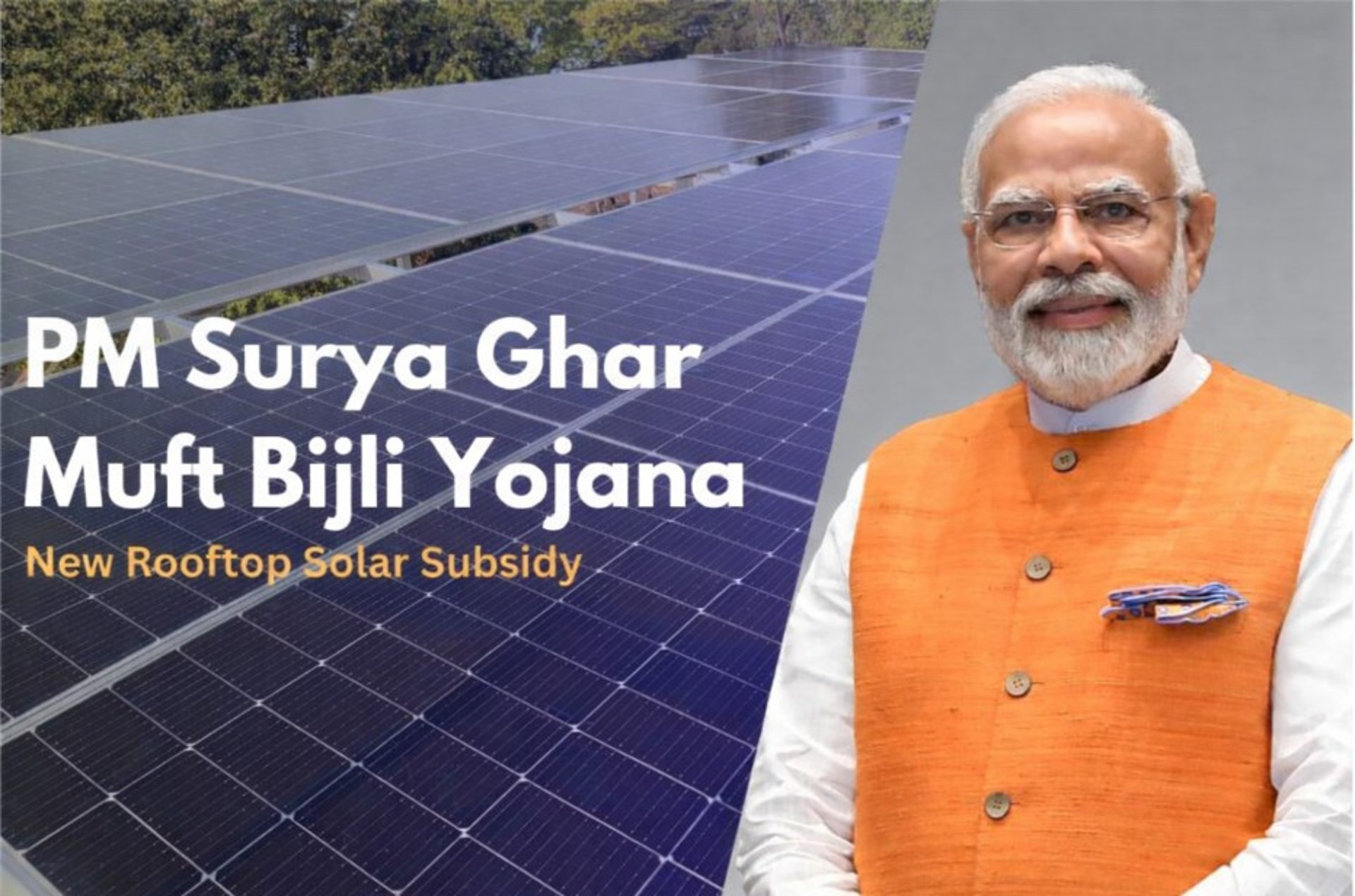
Anyone living in any part of India can use the National Portal ( https://pmsuryaghar.gov.in ) to apply for a Rooftop Solar System installation under PM Surya Ghar Muft Bijli Yojna and receive financial support directly in their bank account. The portal also gives information about subsidy programs, rewards, and other advantages available under this scheme. This makes it more convenient for households to apply for and get the subsidy they are eligible for.
Eligibility Criteria For Availing Solar Subsidy
To qualify for participation in the PM – Surya Ghar: Muft Bijli Yojana in 2025, individuals must satisfy the following conditions:
Hold permanent citizenship of India.
Attain the age of 18 or above.
Own a residential property.
A valid electricity connection is mandatory for the household.
Householders must possess the required documentation.
Maintain an annual income not exceeding Rs 1 or 1.5 lakh.
Aadhaar linked to bank accounts is highly mandatory.
The household must not have previously received any other subsidies for solar panels.
Documents Required to Apply For Solar Subsidy On National Portal
The essential documentation needed for eligible residents of the country to complete the online registration for the Solar Rooftop Scheme includes:
Aadhar card
Proof of address
Identification card
Household ration card (if applicable)
Income certificate
Bank passbook
Mobile number
Passport-sized photograph
Utility bill for energy consumption
Simplified Steps to Apply For Subsidy On National Portal
Now, individuals residing anywhere in India have the opportunity to utilize the PM Surya Ghar Muft Bijli Yojana, National Portal to request the installation of a Rooftop Solar System and directly receive financial assistance deposited into their bank accounts. The portal also provides information on subsidy programs, incentives, and other benefits offered under this initiative, simplifying the process for households to apply for and obtain the subsidy they qualify for.
Here's a step-by-step procedure guide:
Register on the portal by providing the required information.
Choose your State and Electricity Distribution Company.
Input your Electricity Consumer Number, Mobile Number, and Email.
Log in using your Consumer Number and Mobile Number, and complete the Rooftop Solar application form.
The Distribution Company (DISCOM) will carry out a technical feasibility assessment within the upcoming 15-day period.
Upon receiving feasibility approval, engage any of the registered vendors within your DISCOM to install the system.
After installation, submit the plant details and apply for a net meter. The request will be forwarded to the DISCOM.
Following an inspection of the plant to ensure compliance with all guidelines, a commissioning certificate will be issued.
Once the net meter is installed and inspected by the DISCOM, a commissioning certificate will be generated through the portal.
Upon receiving the commissioning report, submit your bank account details along with a cancelled cheque via the portal.
Your subsidy will be deposited into your bank account within 30 days.
Net Metering Benefits And Working
In the solar net-metering system, consumers are billed based on the disparity between the energy they import and the energy they export. For instance, if a consumer imports 1000 kWh during the billing period of June but exports 700 kWh within the same timeframe, they will only be charged for 300 kWh. Similarly, if the energy imported in the following month, July, amounts to 700 kWh, with an export of 500 kWh once again, the surplus 200 kWh will be rolled over to the subsequent month's billing cycle and adjusted accordingly.